Hi Daniel! Thank you for being here with us today. First, can you tell us something about yourself and your background?
I was born as an only child in a refugee family coming from Vietnam and inherited the entrepreneurial spirit from my parents. I was determined to go to university and eventually made it and studied computer science and mathematics. During my studies, I found my passion for cybersecurity and then pursued it as my career. I kicked off at the German Cybersecurity Organization as a cybersecurity engineer. Then McKinsey started to look more into the topics around cybersecurity and recruited me because I had the technical knowledge. So, from a cybersecurity engineer, I became a strategy consultant. I also moved physically to the Southeast Asian McKinsey office in Vietnam where I worked mostly on projects in Vietnam and Singapore. Lately, I was an operator at a corporate venture, a B2B marketplace, where I worked on strategy, product, and sales improvement.
Why is now the right time for you to found your start-up?
I have built a strong network and accumulated experience across different domains and geographies to create something on my own. I have been in very deep technical positions but also in consulting and then as a hands-on operator in a corporate venture. I have also co-founded two NGOs, one with the mission to empower the global Vietnamese community and the other helps students coming from blue-collar families to realize their potential through mentorship and training. With that being said, I now know how to do validation, and how to scale a company but also have an operational and technical skillset. I am not saying that I know everything, but if I do not, I can deep dive into the topic and understand it quite quickly. If I cannot, I can find the right people to team up with.
Why did you pick Antler to build your start-up with?
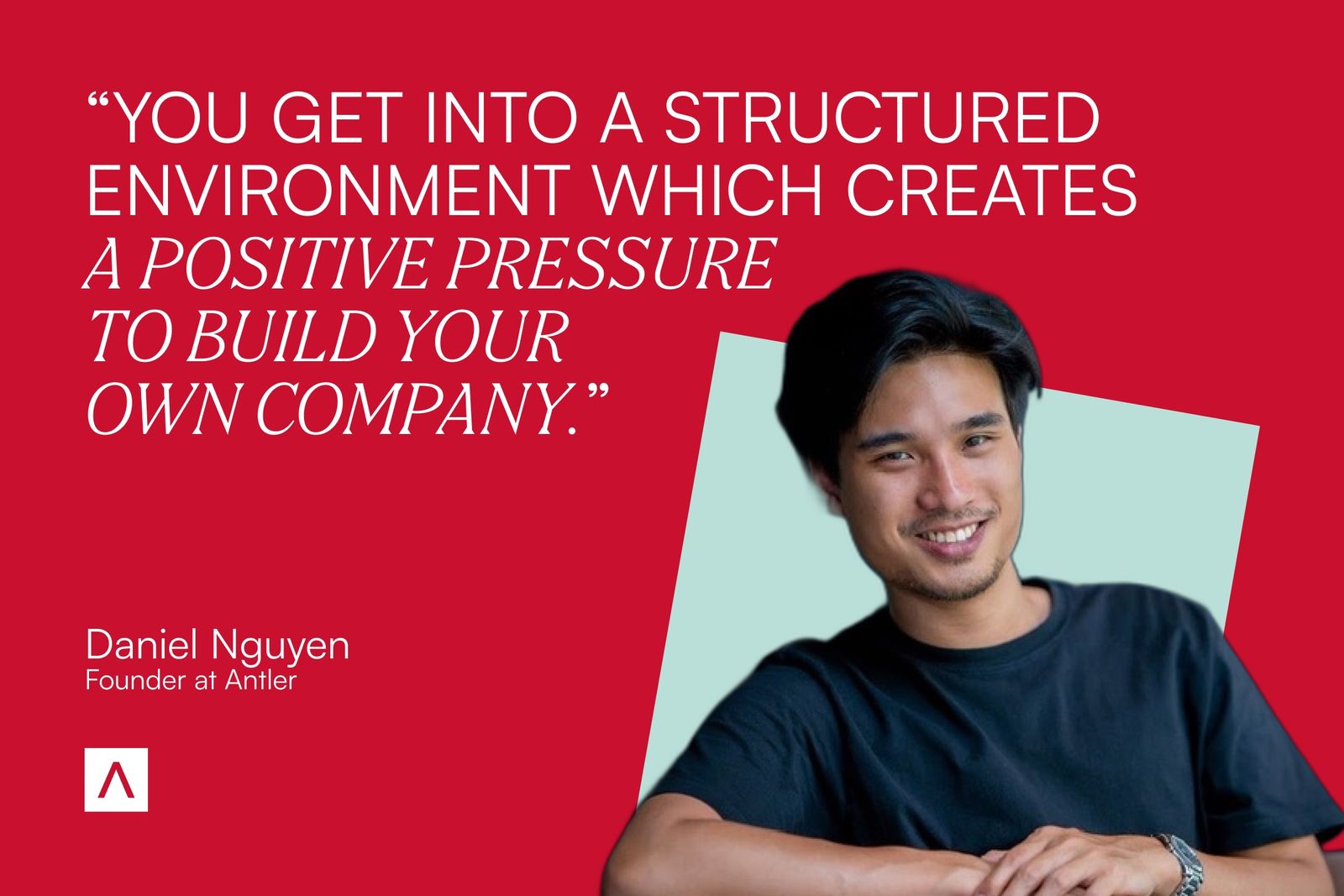
Joining Antler was an attractive opportunity for me. You get access to great talent, and you really enrich your network. You can brainstorm with different people, and you learn a lot by just talking o them. You also get into a structured environment which creates positive pressure to build your own company.
You get access to great talent, and you really enrich your network.
Apart from that, the partners Christoph and Alan, have been incredibly helpful providing feedback and giving guidance. They are not only experienced, but authentic and really embody the people-first approach Antler thrives from.
What surprised you the most since you joined Antler?
I didn't expect to make so many friends. I think that now after the five weeks we have been here all together we have really bonded. We go regularly for dinners, we are hanging out on the weekends and also working together on building great stuff. For me, the deep personal connections are the most valuable thing in this program.
For me, the deep personal connections are the most valuable thing in this program.
What was the biggest challenge for you so far?
I think that so far but also generally when founding a company the ideation process is the hardest part of it all. You are trying to find a product market fit, doing all these interviews with experts but also potential customers. At one point you really get to understand the market and sometimes you just figure out that it is not going to work or the timing is not right and you need to start over. The important part is to keep going until you get validated feedback from prospects.
What would you advise to people who are thinking about founding their own start-up?
Do it quickly. Do not overthink it. Speed of execution is important; especially in the ideation phase. You want to try out new ideas as fast as possible. You will not find out whether the idea is good or not unless you speak to enough experts in the field. However, it is important to keep it structured. Create yourself a structured approach on ideation. In stage one, you set yourself a deadline of one week when you deep dive into the industry and the problem space you want to explore. You will read a lot about the market dynamics, talk to experts, learn about competition, and have an initial estimate of the market size. After that, you should get the first indication of whether the problem is really there, and whether the market is big enough. And if the answer is yes you would continue trying to talk to potential customers and come up with a hypothesis and solution over the next two weeks. This is where you aim to understand your ICP.
Do it quickly. Do not overthink it.
Also, founders need to understand that the network is important and need to set aside time for meeting with people. Just going for lunch or grabbing a coffee with the right people from the ecosystem matters. As a founder, a lot of the value that you bring comes from the network and it helps you build your company. This can be harder in the beginning but you would be surprised how willing to talk people are if you show them your interest.
Do you have any recommendations on books or podcasts that could help founders?
There is a book called “The Mom Test”, which is great to understand the process of idea validation. Then I encourage everyone to listen to the OMR podcast which is a German podcast with CEOs and founders from both established companies and start-ups. Pick the one from the industry which interests you first, but even listening to people from a different industry can give you new perspectives. You will see how they think, and it might eventually help you to better understand your problem or even come up with the right solution. Also, I cannot emphasize this enough but just talk to people. It is extremely valuable.
Where do you see yourself one year from now?
Firstly, I hope that in one year I will find myself pushing on the frontier of technology, meaning that I will be working on something that is really improving the world through the use of technology. Secondly, I want to work in a team where we will all be able to grow together and provide each other mentorship. The last thing I really hope that I will do is to empower others. I want to help people realize their potential.