Welcome to Antler, Raj! First things first, could you tell us a little bit about yourself and your professional background?
I started my journey as a software developer after finishing my engineering degree in 2011. My first job was very corporate: over 50,000 colleagues, slow decision making, hierarchy and cubicles.. With time, I began to realize that this was not the place for me to learn and develop in the way that I wanted to. So, I left and went to work for a mid-sized company where we developed a product for medical researchers to view their images on smart devices.
It was during the time when Apple products were up and coming, so we did quite well. Because of that, we grew quite quickly, which was great, but after a certain point I saw slow decision making, hierarchy, even some cubicles, and other aspects of my corporate job come into play.
So I moved on and went to work with a much smaller company. There were seven of us in total, what we did was migrate call center software from machines to tablets and phones. Doing so empowered people to take their calls from anywhere, and despite being a small company, we were very successful. I was very happy in this space and type of company.
Come 2017, I got a phone call. I was in Mumbai, and on the other end of the line was a VP of engineering from a startup based in Berlin. He was calling me from a coffee shop because the company had no office space. After explaining to me what it was they were doing, he offered me a position as their sixth employee on the engineering team. It was a massive risk, but I thought, why not take it? So I took the job.
Fast forward eight months, the engineering team grew from a team of seven to a team of eighty. This really was a period of hyper growth. Working day and night, celebrating our successes as we reached various milestones – this was really exciting. Within two years we were a unicorn, and by the third, we had exited.
The whole tech team was moved to New Delhi, and I was given the option to go along with them, but I wanted to stay in Berlin. I found a job working as an engineering manager, and alongside that I decided to found my own company.
How did you transition into managing your own teams?
It came quite naturally to me. I think after being in a hyper growth environment, I learned that in order to keep up, I had to grow as well. Most of the responsibilities were on us, so managing teams was another thing that needed to be done.
What sparked you to found your own company?
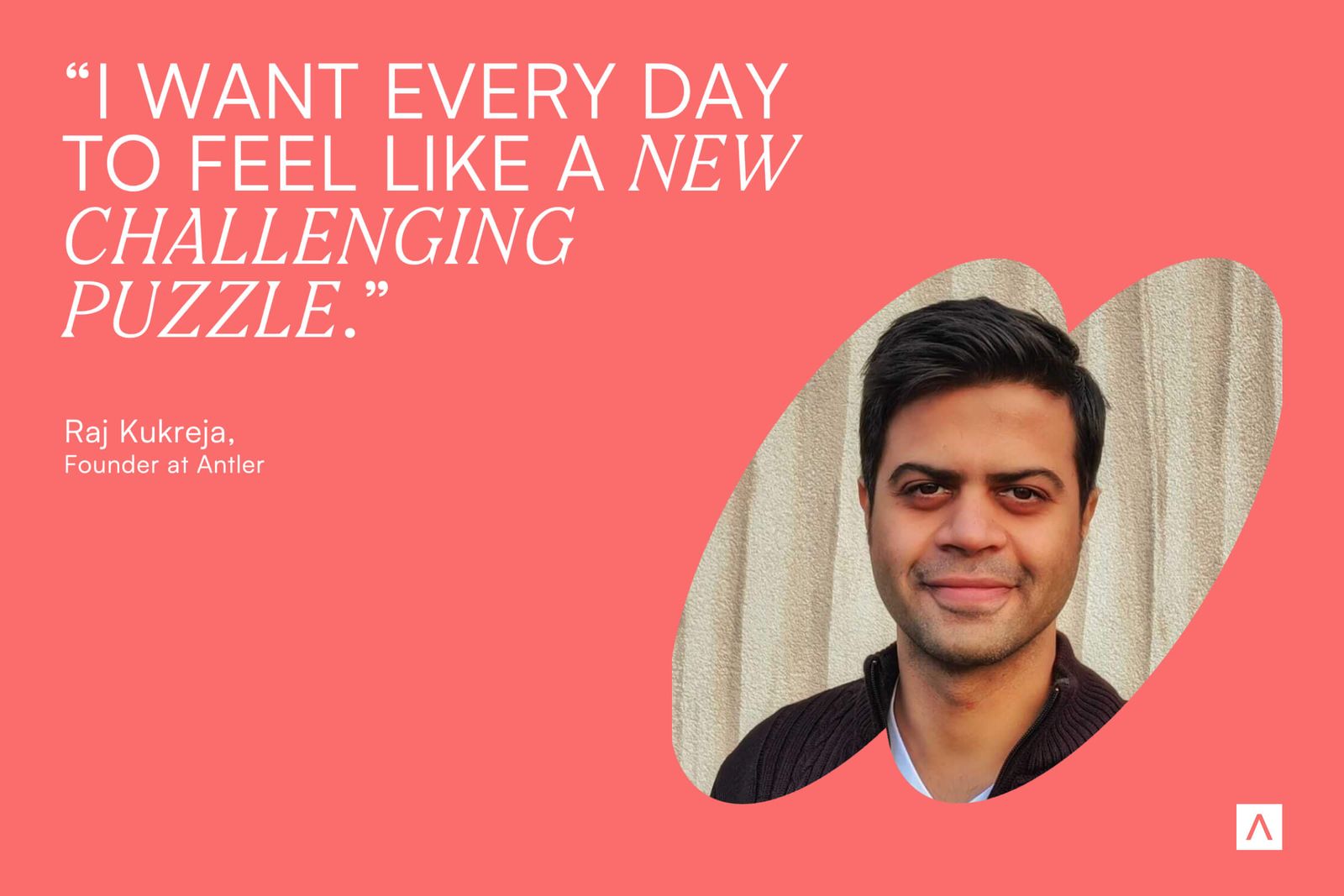
When I was managing my own team of engineers, I wanted to instill in them a culture that made work feel less like work. Founding my own company was done for the same reason. I wanted every day to feel like I was solving a new challenging puzzle. Finding solutions to problems and focusing on true innovation inspires me every day.
How did your first venture develop?
Two engineering friends and I founded a B2B tech company. Long story short, it did not go very well. The product worked great, we were a team of three engineers after all, but the issue came when we tried to sell it. Within nine months we had to shut down. Since starting at Antler, I have done a retrospective into that product, and I can see now how important it is to have a founding team made up of people with diverse experiences and strengths. Sales in B2B are typically done over lunch, dinners, beers, and we were not able to crack that. Now, here at Antler, I can experience firsthand the value that comes when working with a balanced team.
What sectors are you most interested in?
Remote working, fintech, and legal tech, of course, since that’s the space my co-founders and I are currently working in here at Antler.
How did you come across Antler?
Alan Poensgen initially reached out to me over Linkedin, and from there I did my own research and found that two colleagues from the unicorn company had been in Antler residencies – one in London and one in Sweden. I reached out to them to hear more about their experiences, in fact they even pitched me their ideas to see if I wanted to join them as CTOs, but I ultimately decided I wanted to experience the journey on my own.
We’re now gearing up to the investment committee at Antler, how has the journey been so far?
It's been great. It’s a roller coaster starting off getting to know everyone to now actually working on a company with my two other co-founders. I really appreciate the structure of the residency because the timing of certain sessions is done in a way that supports founders to find success in shaping a co-founding team and working together to build something great.
How has it been working with your two other co-founders?
Very interesting, to put it lightly – we all have different superpowers, tech being mine, so being able to put them all together makes our collaboration that much more exciting. I came to Antler keen to connect with people with a different expertise than my own, and I’m happy to say that my team strikes that balance. A problem can be solved in a million different ways, but finding the right one is made much easier when you’re surrounded by the right people.
Want to join Raj and other exceptional founders? Applications for the Antler Berlin cohort starting January 16, 2023 are still open.