Hi Viktoria! Thank you for taking the time to sit down with me. Can you tell me a bit about the beginning of your career and how you got into entrepreneurship?
I was in banking when the financial crisis hit back in 2008, and during this time everyone was panicking. To combat this, my company created and implemented products that not only increased sales, but also offered employees a sense of security. This is the first time I became aware of the fact that difficult times can be transformed into opportunities. Seeing this inspired me to enroll in a communications and marketing management course that then ultimately led to the beginning of my founding journey.
What was one of your biggest learnings from this course?
I clearly remember one professor who taught a course in entrepreneurship. He was the first person who opened my eyes to the world of startups, and I remember feeling this intense desire that this is where I need to be.
What was your first founding experience like?
A few years into my studies, my father told me that he had a dream of starting his own real estate business. His background in sales positioned him well, but he explained that he needed someone to help him build the brand and position the company in the market. That someone he had in mind was actually me, his daughter. I ended up co-founding this company with him and eleven years later it still exists today.
How was it working with your father?
Coming from the same family, we had so much mutual respect and care for one another that we were able to further develop both our personal relationship and our professional one. During our first conversation about it, I remember seeing this fire in my fathers eyes that only got brighter as we embarked on the journey of founding this company together. I had a front row seat to watch his dream come true, and this was very inspiring.
Can you tell me a bit about your work experiences upon moving to Berlin?
I actually came to Berlin without a job, but within two weeks, I was hired as the first marketing employee at Paul Camper, a recreational vehicle rental agency. During my time there, I built up the marketing department and developed and implemented strategies around the brand, communications, and marketing. Since I joined the company very early on, I saw its journey from a wordpress site to a fully automated booking platform.
Two and a half years later, I became curious to learn about the potential within established companies to build something new, so I joined a global travel platform, where I was responsible for communications within the German market. My time at this company was cut short because I was diagnosed with breast cancer eight months later. Everything in my life was turned upside down from that moment onwards.
Can you tell me more about how things changed?
Coming to terms with my diagnosis was very challenging, but I was able to deal with my own pain. What was more difficult was grappling with the pain I felt for everyone else who was diagnosed with such a disease. Your pain is my pain: neuroscientists call this affective empathy. This feeling is what really motivated me to carve a new path in the digital health space.
I became interested in leveraging technology and data to benefit people. Given my background in marketing, I’ve seen how machine learning and automation can help make processes more efficient, so I began to wonder how these tools can be used in the health sector. This combined with a strong urge I had to take my experience and turn it into something that could benefit others.
Motivated to make a change, I came across the founder of the Hippo AI Foundation, a non-profit organization focusing on liberating medical data from its silos. It was very early days, so I reached out to the founder with a proposal to collaborate with him, and he brought me onto his team as his co-founder. The work we did was very fulfilling for me both professionally and personally, and in 2021 the organization ended up winning the German AI Award.
What led you to move on from this position?
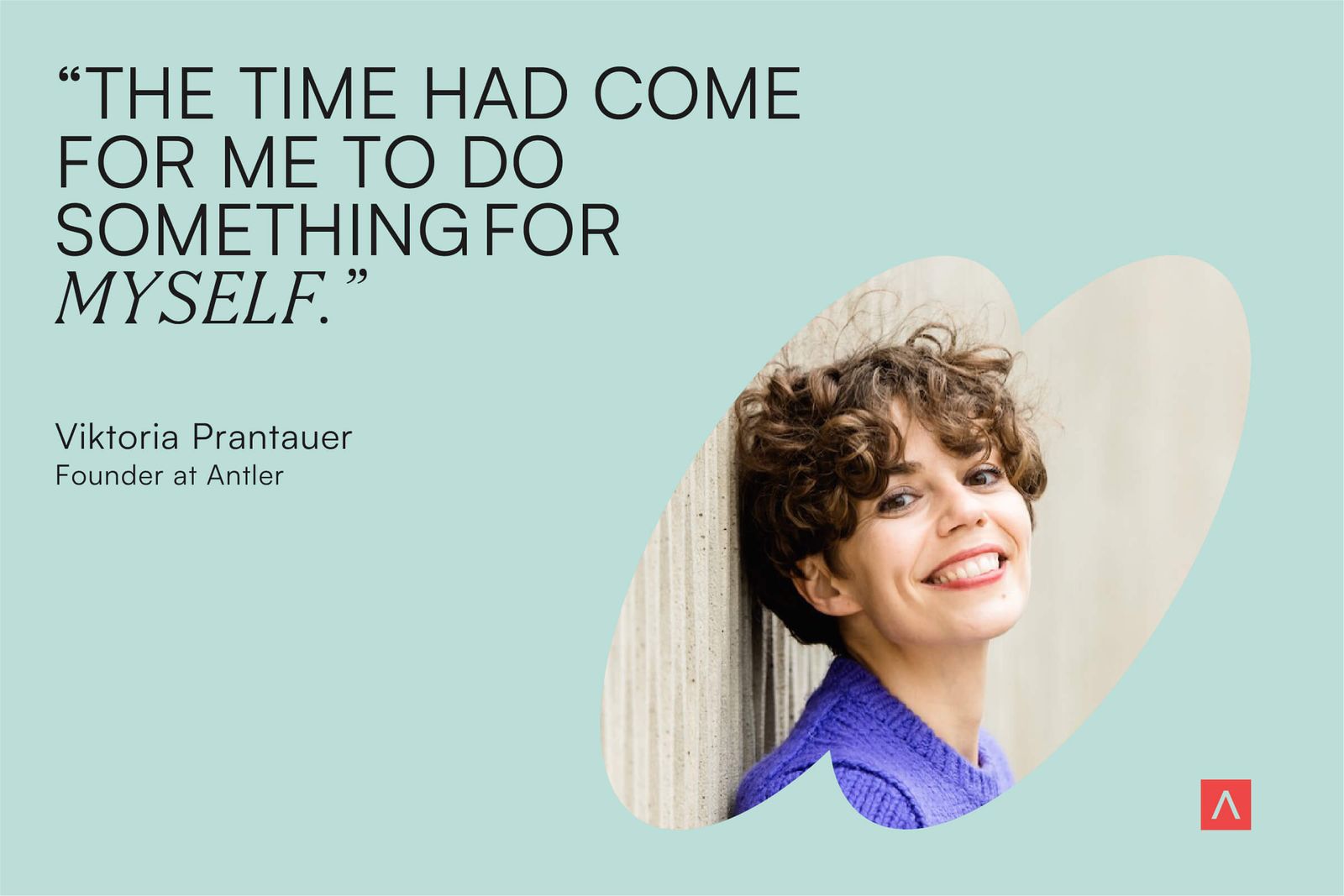
This past spring, I came to the realization that I had spent the last ten years building up companies for other people. Don't get me wrong, I loved all of my past experiences, but I felt like the time had come for me to do something for myself.
How did you hear about Antler?
Whenever I am unsure with what next step to take in my career, I always start networking extensively. During this time there were two instances where Antler cropped up. I knew that I wanted to found my own company, but I also knew that I didn’t want to do it on my own, so the residency piqued my interest. After doing some more research into the company, I was drawn to Antler’s mission to make the startup ecosystem more diverse, and its commitment to helping founders find the right co-founder. Ultimately, I came to the conclusion that Antler was exactly what I was looking for.
How has your Antler journey been so far?
I appreciate how much effort and energy Antler puts into facilitating co-founder matching because I truly believe that this is one of the most important, if not the most important, aspects when founding a company. My past experiences taught me the importance of relationships, so I can really appreciate this. Now, I’ve found a co-founder, someone who I immediately felt connected to, and we are in the ideation process where we are bringing together our worlds of organizational psychology, data science, digital health, data, and marketing. I feel like she has my back, so whatever we do together I know that it’s going to be good.
Want to join Viktoria and other exceptional founders? Applications for the Antler Berlin cohort starting January 16, 2023 are still open.